Jobs in the Apparel Manufacturing Industry, and other Apparel Terminology, by Carla Buchanan
1. Accounts Receivable: The person who does the Accounts Receivable job calls customers who have not paid their bills, collects money due to the company, carries out billing, monitors customer accounts, prepares bank deposits, resolve customer billing issues, communicates with customers via phone, mail, or personally. The accounts receivable job may include other duties such as faxing, filing, copying or mailing.
2.
Assistant designer: The person who does the Assistant Designer job may do lab dip and embroidery approvals, flat sketching, sample room follow up, prepare line sheets, cost sheets, assist with tech packs, some graphics, and create catalog and sample shopping. This person must be detail oriented. It also helps to be able to multi task and meet deadlines.
3. Bar Code: A barcode is a machine readable representation of data. It is usually linear, but they also come in patterns. Barcodes can be read by optical scanners called barcode readers. Some apparel come with a barcode. Barcodes are also used when shipping product.
4. Buyer: A retail buyer purchases the apparel to be sold in the retail store for sale to the customer. Buyer responsibilities include working with the store management to develop a budget, decided on the correct mix of merchandise, purchasing the merchandise, and sometimes splitting the merchandise between stores. A retail buyer can also manage store promotions.
5. CAD: Computer Aided Design is software that helps with pattern development and marker making.
6.CEO: Chief Executive Officer is one of the highest ranking corporate officers in charge of total management. It is the job of the CEO to align the company with their strategic vision.
7. CFO: The Chief Financial officer is a corporate officer primarily responsible for managing the financial risks of the corporation. He/she is responsible for financial planning, record keeping, and financial reporting to higher management.
8. Customs Broker: Customs brokerage is a job that involves clearing goods through customs. This involves preparing paper work and calculating taxes and duties. In the United States, custom brokers are licensed by the US Customs and Border Protection. Custom Brokers can be employed by freight forwarders, independent businesses, employed by shipping lines, importers, exporters, trade authorities and customs brokerage firms.
9.Designer: Fashion designers study fashion trends, sketch designs of clothing, select colors and fabrics. Some fashion designers sketch on paper, some drape the dressform. Most garments are created in muslin first, then the fashion designer will consult a professional pattern maker. Clothing fashion designers create and help produces intimate apparel, maternity, outerwear, formalwear, suits, children’s apparel, apparel for men and women, casual wear and sportswear. Fashion designers may work full time for one fashion company, this is known as in house designers. They may work alone, or part of a team. Fashion designers can also work freelance. Some are self employed.
10. EDI: Electronic Data Interchange: Electronic Date Interchange enables the computer system from one company to talk to the computer system of another company. The computers can exchange ideas. In apparel, it allows companies to electronically exchange documents, like purchase orders and invoices, and garment information. EDI reduces or eliminates data entry errors, makes processing much faster, and increases productivity with fewer staff members. EDI saves time and money.
11. Fabric and Trim Buyer: A fabric and trim buyer searches the globe to find the fabrics and trims needed for the apparel line. The fabric and trim buyer handles the negotiations of things like color, prices, and logistics. This person travels a lot. This person must be a good bargain hunter. Also, they should be great at math. It is helpful if they know many languages.
12. First Pattern Maker vs. Production Pattern Maker: The first pattern maker works directly with the designer. The first pattern maker takes the original sketch and makes a pattern. A production pattern maker generates production patterns. A production pattern set that has been corrected without mistakes. The patterns must have every piece to create the garment.
13.Grader: A pattern grader takes a pattern, which has been made by a pattern cutter, and makes different sizes needed for the line. This work is sometimes done by hand, but usually, these days, done by the use of a computer. Pattern graders usually work 37-40 hours per week. Part time work is available too. They spend a lot of time at a computer screen.
14.HR department: The job of the HR (Human Resources) department can vary, depending on the company. Typically, the HR department has the responsibility for all the functions that deal with the needs and activities of the organization’s people. Some examples of areas of responsibilities may include: recruiting, hiring,training, organizational development, communication, performance management, coaching, policy recommendations, salary and benefits, team building, employee relations and leadership.
15. Independent buying office: An Independent Buying office represents many retailers. The office helps the retailers buy the apparel merchandise for their stores. This benefits the retailer because it gives the retailer more buying power than the retailer would have on its own. Economically, they make sense for the retailer. An independent buying office can get discounts for the retailer that the retailer would not get other wise. They save the retailer time and money.
16. Marker Maker: The marker makers responsibility is to lay the production patterns on marking paper in preparation for cutting the fabric in an efficient manner. This work can be done electronically as well. The best use of space is carefully considered as the the pattern pieces are arranged for cutting. This assures that fabric is not wasted.
17. Merchandiser: A merchandiser may responsible for putting together an assortment that will profit the retailer. A merchandiser responds to customer feedback and market trends. A merchandiser may work with store management to make the best use of a store’s space and to execute store promotions. A merchandiser may also be responsible for the store’s fixtures, conduct merchandising clinics, and establishing positive relationships with accounts by merchandise training and communication. A merchandiser may manage inventory and implement point of sale materials. A merchandiser may work with designers, forecasters, and market researchers to develop promotion strategy and content of the line. A merchandiser may supervise buyers and sales managers. Also, the merchandiser may manage the overall business of several departments, or, even, the entire store.
18. OP Manager: A manufacturing operations manager has responsibility for an operations site. A manufacturing operations manager may report to the CEO. He/she may set up new facilities. In addition to operations, a manufacturing operations manager may be responsible for overseeing production teams, identifying problems, maintaining quality, reviewing new manufacturers, improving communication in the supply chain, designing distribution, coordinating design and distribution departments, maintaining license agreements, processing claims, garment inspections, building relationships with manufactures, overseeing staff training and recruitment.
19. PDS: Pattern Design Software is a computer application that allows the user to create and manipulate full-szie apparel patterns in a digital format. This increases productivity and still leaves room for creativity. Pattern makers can make changes easily. PDS is a much faster way to make and manipulate a pattern than by doing the task by hand. Pattern makers consider PDS an invaluable tool for speed, accuracy and transmission of data.
20. Piece Goods Buyer: A Piece Goods Buyer acts a a purchasing agent in researching and buying fabrics, trims and notions that have been selected by the designer. A piece goods buyer interacts with textile producers to make sure the fabrics, trims and notions are the quality at was promised, and the goods are delivered on time.
21. Pre-production Department: The pre-production department reacts when fabric comes in widths different than the original order. It verifies that samples are correct and complete. The pre production department oversees pattern making specifications, updates employees on new developments form Product Development, Custom Orders, and Sales departments. The preproduction department stays current with the PAD system and other related software. It also assures that tech packs and samples are up to date. It updates forms and procedures to improve work flow, and it works to expedited completion of custom orders.
22.Product Developer: The product developer comes up with new products and assortment plans. Many times the product developer comes up with products for retail, catalogue, and the web. The product developer may order, maintain and manage product samples, follow up with internal teams and external vendors regarding sample status, follow up on pricing and product requirements, load product details in spreadsheets, maintain master catalog spreadsheets, handle correspondence, assist with fabric color and sample approvals, and prepare historical information.
23.Production Cutter: Production cutters use the patterns and cut out the fabric to be used in the construction of the garment. Following the outline of the fabric they place multiple layers of fabric on the cutting table and use an electric knife, or other cutting tools to cut the various pattern pieces. In some companies, computer controlled machines do the cutting. Most production workers are trained on the job. Mistakes are costly.
24. Production Department: The production department is responsible for the procedures and processes in actually making the apparel. Production schedules are determined in the production department. Other duties include planning and executing deadlines, product assembly, and final approval of technical design. More responsibilities include specifications and costing, making production patterns, grading patterns, generating markers, cutting, sewing finishing and distributing. Today, production departments may be in charge of sourcing the product and working with contractors to get the goods produced in a timely manner.
25. Production Manager: A production manager is responsible for making sure that the garments are produced to the right quality and quantity, on time and are the right price to meet the customers expectations. Production managers oversee production, work with suppliers, in house design, sales, buyer and quality control teams, plans production schedules, and overcomes production problems.
26. Quality Control: A quality control director interacts with design and merchandising directors to determine the specifications for the products. A quality control director monitors how well production meets the quality standard. A quality control director may monitor the company’s apparel sizing.
27. Ratios: A financial ratio is a relative magnitude of two numerical values taken from a companies financial statements. Examples of ratios include liquidity ratios, activity ratios, debt ratios, profitability ratios, and market ratios.
28. Sales Reps: A sales representative may promote company apparel in showrooms at major markets, or through truck shows. A sales representative works with buyers to come up with techniques to promote the line. A sales representative also may work in an assigned geographic region.
29. Sample cutter: Works with the production and design teams to ensure that all of the samples are cut accurately. A sample cutter runs the cutting machine to cut fabric for the samples.
30. Sample Maker: A sample maker works with the designers, first pattern makers,merchandisers, product managers, and/or production pattern makers. Sometimes it takes 4 or 5 prototypes to get the right design. The sample maker produces the prototypes for each design. A prototype is a cut and sewn example made from the first pattern.
31. Sewing contractor: A sewing contractor can provide these services: sample sewing, contract sewing, pattern drafting, industrial sewing, pattern grading, sourcing of materials, product design and development, and prototype sewing.
32.Stylist: A stylist may select fabrics, coordinate lines, oversee the process of interpreting knock off styles. A stylist may adapt higher priced styles to fit the target market for a company’s product.
33.Trade Shows: Five examples of trade shows: 1) Los Angeles International Textile Show will be March 15-March 17, 2010. The show is organized by California Market Center at California Mart Exhibit Center, LA, CA. It is a 3 day show that is attended by reputed manufactures form different sectors of textile machinery, garment making, etc. 2) Focus Apparel & Accessories show is March 20-March 22, 2010. It is a prestigious trade show in LA featuring clothing and accessories. There will be a fresh mix of contemporary collections for men and women. 3) The Great Bridal Expo-Los Angeles will be March 28, 2010. This show offers the latest styles from the industries top manufactures of bridal gowns, mother of the bride, bridesmaid, flower girl, accessory, prom and special occasion. 4) Chicago Collective is January 31-Feb 10, 2010. It is the premier show for men’s apparel in North America. It has over 300 exhibitors and 1,000 lines. 5) Pure London is Feb 14-Feb 17, 2010. It is the UK’s largest and one of Europe’s most exciting fashion trade events. It has womenswear, young creative labels, footwear, and accessories.
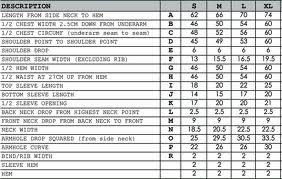
34. Technical Designer: A technical designer may lead fit sessions, work with designers to get the perfect fit desired, evaluate samples for fit, balance, proportion, workmanship and label sew method, establish specs on points of measure, track and manage workflow, produce technical reports with photos, bill of materials, measurements, modifications, illustrations, construction details, graded measurements, and changes.